The Recovered Instant
Photography is not the act of capturing, but the act of knowing how to wait. There is a fundamental difference between the impulsive shutter release and the deliberate waiting for the exact second when light caresses a cheek with just the right intensity. I remember an afternoon in the Albaicín, one of those days where the heat seems to vibrate over the pavement. I had spent nearly an hour with the camera against my chest, without even seeking the viewfinder, simply watching how the shadows of the cisterns lengthened and thickened. It was not about finding a frame, but about allowing the frame to find me.
There is a particular tension in that silence, a kind of technical suspense where the hand halts and the finger only presses when the light has finished sculpting the form. In this exercise of patience, time seems to stand still, and it is there, in that interstice between the pulse and the shutter, where reality reveals itself as something more than a mere coincidence of photons. It is the moment when light ceases to be illumination and becomes presence.
The Weight of Light in Portraiture
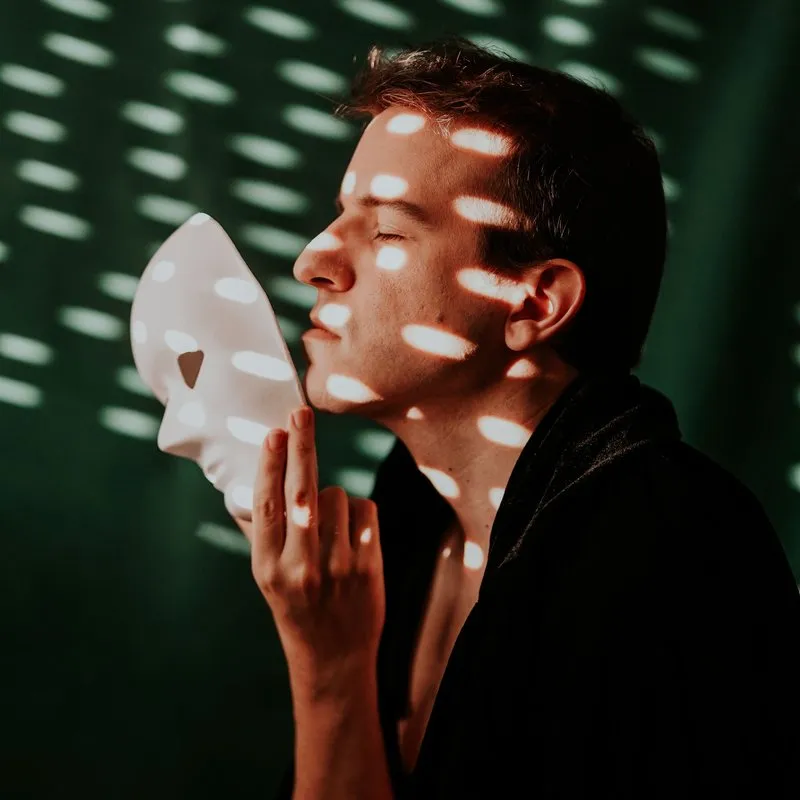
When I approach a portrait, I do not seek technical perfection, but the truth that dwells behind the eyes. Light must be a narrative element, capable of sculpting shadows and giving relief to the story the face attempts to tell without words. I am not merely speaking of correct exposure, but of the intention behind the optics: the choice of a focal length that does not distort, yet does not emotionally distance the viewer from the subject; the search for a side light that, through a soft gradient, reveals the texture of the skin and the depth of a weary gaze or a contained smile.
Often, the process is a dance of light and shadow, almost a negotiation. There is a vital importance in controlling contrast. A light that is too harsh can violate the expression, while a light that is too flat can strip the subject of their three-dimensionality and, consequently, their soul. It is a silent dialogue between the lens and the essence, a commitment of respect toward the subject’s vulnerability, where the shadow is just as important as the highlight.
The Heritage of Light in Granada
In the streets of Granada, light possesses its own texture, a density that seems steeped in history. It is not an indifferent light; it is a light that knows how to filter through the alleys of the Alhambra and rest upon the stone with an almost liturgical reverence. It is a light that changes character according to the hour: golden and melancholy at sunset, or a harsh, revealing zenithal light that, at midday, strips bare every crack in the ancient walls.
Capturing that light is, in large part, understanding the memory of the city. There is an almost tactile quality in the way the afternoon sun hits the white facades, creating a contrast that forces us to adjust our visual dynamic range. It is a light that does not only illuminate, but narrates the layers of time that compose it, from the Nasrid legacy to the modernity that beats within its squares.
Technique at the Service of Vision
At times, technique seems like a limitation, but in reality, it is the tool that allows vision to manifest without interference. The choice of equipment—the aperture of the diaphragm to decide which part of the world remains in focus, the sensor sensitivity to capture what the human eye barely perceives in the gloom—is part of the wait. Every technical decision must be subordinate to the narrative of the image. It is not about using the best equipment, but about using the equipment that best knows how to translate the light we are waiting for.
Waiting as a Craft
In the end, photography is a lesson in humility. It teaches us that we cannot force beauty; we can only be present for when it decides to manifest. It is a craft of observation and constant presence, a learning process about renouncing absolute control. It forces us to accept that, no matter how much we have planned a frame or an illumination, the light will always have the final word. It is, ultimately, a way of learning to see what others simply overlook.
To learn more about my process and the resulting images, you can visit my journal.